Farmers Markets Lehigh Valley: The Complete Guide to Every Market
Quick Answer: The best farmers markets in the Lehigh Valley split into two camps, and you want both. For the classic outdoor, producer-driven Saturday market, the Easton Farmers' Market — founded in 1752 and billed as the oldest continuously operating open-air market in the United States — runs Saturday mornings on the Scott Park riverfront from spring through December, then shrinks to a winter market on Northampton Street. For everything-under-one-roof, every-week-of-the-year shopping, the Allentown Fairgrounds Farmers Market on Chew Street is a roughly 90,000-square-foot indoor market with 60-plus vendors, open Thursday through Saturday no matter the weather. Around them orbit a full week of smaller markets — Bethlehem on Thursdays and Saturdays, Emmaus and Hellertown on Sundays, Macungie on Thursday evenings — plus the Easton Public Market, an indoor food hall that is a different animal entirely.
Key Takeaways:
- Oldest and most famous: The Easton Farmers' Market dates to 1752 and claims the title of America's oldest continuous open-air market. It runs Saturday mornings at Scott Park on the riverfront, May through December, with a smaller winter market January through April.
- Best year-round option: The Allentown Fairgrounds Farmers Market at 1825 W Chew St is indoor, open Thursday, Friday, and Saturday all year — 60-plus vendors under one roof, with The Market Grille (4.9 stars, 450+ reviews in our directory data) cooking inside it.
- There's a market almost every day: Thursdays belong to Bethlehem's Farrington Square and Macungie; Saturdays to Easton, the Bethlehem Rose Garden, and Trexlertown; Sundays to Emmaus and Hellertown.
- Farmers market and food hall are not the same thing: The Easton Public Market at 325 Northampton St is an indoor, five-days-a-week food hall run by the same organization as the outdoor farmers market — go to one for a week of produce, the other for lunch.
- Timing is everything: Pennsylvania asparagus and strawberries peak in late spring, sweet corn, tomatoes, and peaches carry high summer, and apples and pumpkins own the fall. The market in mid-August and the market in mid-May are two different markets.
- Assistance programs work here: Most of the major markets take SNAP/EBT — Easton matches SNAP purchases with Fresh Food Bucks up to 10 dollars a day — and Pennsylvania's Farmers Market Nutrition Program checks are good at participating farm stands from June through November.
- Shortcut: Make a full morning of it — pair any market run with our Lehigh Valley bakeries directory or find the town's best table in our complete restaurants directory.
Which Lehigh Valley Farmers Market Is Best Overall?
Farmers markets Lehigh Valley: a search that returns two very different winners depending on what you actually mean. If you mean the traditional open-air market — farmers behind folding tables, produce picked that morning, a crowd, a band, a river — the answer is the Easton Farmers' Market, and it isn't close. If you mean a place to reliably do a big chunk of your weekly food shopping from local vendors in any month and any weather, the answer is the Allentown Fairgrounds Farmers Market.
The honest advice is to stop treating this as one ranking. Easton is an event that happens to sell excellent food; Allentown is a grocery run that happens to be a 70-year-old institution. The rest of the Valley's markets — Bethlehem, Emmaus, Hellertown, Macungie, Trexlertown — are neighborhood markets: smaller, friendlier, and organized around a single morning or evening each week. This guide covers all of them, plus the food hall that keeps getting confused with a farmers market, what's actually in season month by month, and what to do with the rest of your day once the tote bags are full.
One caution before any of it: market days, hours, and locations shift from season to season — Easton's market itself moved a few blocks in 2020 and stayed. Every schedule below reflects the market's recurring pattern as of our research, but confirm on the market's own website or social pages before you drive over, especially in the shoulder months.
How Old Is the Easton Farmers' Market, Really?
Founded in 1752 — the same year as the city itself — the Easton Farmers' Market bills itself as the oldest continuously operating open-air farmers market in the United States. That's a 274-year run. For scale: the market was already a going concern on July 8, 1776, when Easton's Great Square (now Centre Square) hosted one of only three first public readings of the Declaration of Independence. The market you shop on a Saturday morning is older than the country you're standing in.
Where does it set up now?
For most of its history the market lived in and around Centre Square downtown. In 2020 it moved a few blocks southeast to Scott Park on the riverfront — 128 Larry Holmes Drive, where the Lehigh River meets the Delaware — and the move stuck. It turned out a riverside park with room to spread out, a music stage, a playground, and direct access to the D&L Trail suits a modern market better than a traffic circle does. Expect somewhere around 40 vendors in peak season: produce farmers, pasture-raised meat and eggs, artisan cheese, bread and baked goods, cut flowers, honey, prepared food, and local wine and spirits.
When does it run?
The main season runs Saturday mornings, typically 9am to 1pm, from May through December, rain or shine. January through April, the market contracts into a winter market — a shorter Saturday window, historically 10am to noon, held on the 300 block of Northampton Street in front of the Easton Public Market. Same growers, smaller footprint, more root vegetables. Check the market's site for the current season's exact dates before a winter trip.
What Makes the Allentown Fairgrounds Farmers Market Different?
Everything about the Allentown farmers market at the Fairgrounds is the opposite of Easton's. It's indoors. It's year-round. It's enormous — the market has occupied its building at the Allentown Fairgrounds at 1825 W Chew St since 1955, and after a 1958 expansion it grew to roughly 90,000 square feet, which made it one of the largest markets in the Northeast. And it's a Pennsylvania German market-house in the old tradition: permanent stalls, multi-generation family vendors, and a rhythm built around the end of the week.
It operates Thursday through Saturday every week of the year — recently Thursdays 9am to 7pm, Fridays 8am to 7pm, and Saturdays 8am to 6pm, though confirm current hours before an early or late run. Inside you'll find 60-plus merchants: produce stands (Berghold's, the market's oldest, has been selling fruit and vegetables there since 1955), butchers, fishmongers, bakers, cheese counters, Amish and Pennsylvania Dutch specialties, and prepared-food stalls.
Build in time to eat. The Market Grille, the counter-service grill inside the market, holds 4.9 stars across 450-plus reviews in our directory data — remarkable numbers for a lunch counter — and its fries are made from potatoes sold at the neighboring produce stand, which is about as short as a supply chain gets. It's a better lunch than most sit-down options in our Allentown restaurant rankings, and you can shop your way back to the car afterward.
What's the Difference Between a Farmers Market and a Food Hall?
Easton makes this confusing on purpose, because both of its markets are run by the same organization and sit three blocks apart. The distinction matters for planning your visit.
The Easton Farmers' Market (outdoor)
A true farmers market: temporary stalls, producer-driven, one morning a week, seasonal rhythm. You go to buy ingredients — this week's corn, this week's peaches — directly from the people who grew them. It happens Saturday mornings at Scott Park in season.
The Easton Public Market (indoor)
A year-round indoor food hall and artisanal grocery at 325 Northampton St, about 16,000 square feet with roughly 14 permanent vendors — a butcher, a baker, a fishmonger, wood-fired pizza, smoked barbecue, craft beer, coffee. It's typically open Wednesday through Sunday and closed Monday and Tuesday, with restaurants opening late morning. You go there to eat lunch and pick up a few groceries, any day the doors are open.
The two together are marketed as the Easton Market District, and the practical rule is simple: Saturday morning outdoors for the week's produce, any other day indoors for a meal. If the Public Market's food-hall format is what you're after, our downtown Easton restaurant guide covers how it fits into the rest of the city's food scene.
Which Market Runs on Which Day of the Week?
The Valley's markets are staggered well enough that you can shop a local market nearly every day from May through October. Here's the week at a glance — recurring patterns, so verify times in the current season:
- Thursday (daytime): Bethlehem Farmers' Market at Farrington Square on the South Side — midday hours, roughly 10am to 2pm in recent seasons. The Allentown Fairgrounds Market also opens for the week on Thursday.
- Thursday (evening): Macungie Farmers Market at Macungie Memorial Park, 4 to 7pm — the Valley's main after-work market.
- Friday: Allentown Fairgrounds Farmers Market, full day indoors.
- Saturday: The big day. Easton Farmers' Market at Scott Park (9am–1pm, May–December), Bethlehem Rose Garden Farmers Market (9am–1pm, late May through early October), Trexlertown Farmers Market (Saturday mornings), and the Allentown Fairgrounds.
- Sunday: Emmaus Farmers' Market at Triangle Park (10am–1pm in season) and the Saucon Valley Farmers Market in Hellertown (9am–1pm, May–November).
- Monday–Wednesday: No true farmers markets — this is when the Easton Public Market (Wednesday onward) and farm stores like Klein Farms in Forks Township carry you.
What Do Bethlehem's Farmers Markets Look Like Now?
Bethlehem runs two markets, on opposite sides of the river and opposite ends of the week, and neither is the defunct downtown market some older guides still list.
Bethlehem Farmers' Market at Farrington Square (Thursdays)
The city's longest-running producer-only market sets up in Farrington Square at Lehigh University — the plaza at New and Morton Streets on the South Side, in the campus development some locals still call Campus Square. It runs Thursdays over the midday hours, roughly 10am to 2pm, from late April into mid-November in recent seasons, with live music most weeks. It's a compact market — fresh produce, prepared foods, baked goods — that draws a mix of students, hospital workers, and South Side neighbors. Verify the current season's dates on Lehigh's sustainability pages before going.
Bethlehem Rose Garden Farmers Market (Saturdays)
On the west side, the Mount Airy Neighborhood Association runs a Saturday-morning market in the Rose Garden park at 8th Avenue and Broad Street — 9am to 1pm, roughly Memorial Day weekend through early October. It's the more classic neighborhood market of the two: a leafy historic park, kids' events, school groups, and a produce-first vendor list. Either market pairs naturally with lunch from our Bethlehem restaurant rankings.
Is the Emmaus Farmers' Market Worth the Sunday Trip?
Yes — and it's quietly the most consistent market in the Valley, because it's the rare outdoor market that never fully stops. The Emmaus Farmers' Market runs Sundays at Triangle Park in the middle of the borough, rain or shine: 10am to 1pm from May through November, shorter 10am-to-noon hours in December, and then twice-monthly winter markets (historically the second and fourth Sundays) from January through April. That's a farmers market with no true off-season.
Expect 30-plus vendors at peak — produce, pastured meats, dairy, mushrooms, bread, and a strong prepared-food contingent — in a small-town Main Street setting that makes the whole morning feel like an event. Emmaus takes its market seriously; the market is a producer-oriented operation, and the vendor quality reflects it.
What About Hellertown, Macungie, and Trexlertown?
Three smaller markets round out the map, and all three were active as of our research.
Saucon Valley Farmers Market (Hellertown, Sundays)
A volunteer-run Sunday market next to the Hellertown Area Library at 409 Constitution Avenue — 9am to 1pm, May through late November, rain or shine. It has real community-fair energy, with themed weekends through the season (a salsa fest, dog days, Halloween at the market). If you're doing a Sunday doubleheader, Hellertown opens an hour before Emmaus and the two are about 15 minutes apart.
Macungie Farmers Market (Thursdays)
The Valley's evening market: Thursdays 4 to 7pm at Macungie Memorial Park on Lumber Street, roughly May through October. Because it's the after-work option, it draws vendors you won't catch on weekend mornings — small-batch coffee roasters, baked goods, poultry, seasonal produce — and it's the easiest market to fold into a commute home through the western Valley.
Trexlertown Farmers Market (Saturday mornings)
Still active, but this is the one to double-check before driving: the market has recently relocated to Grange Park on Grange Road, west of Allentown, running Saturday mornings (roughly 9am to noon) in season. A market that has just moved is exactly the kind whose details change — confirm the location on its social pages first. As for Whitehall, we could not verify a currently operating weekly farmers market there; Whitehall-area shoppers are best served by the Allentown Fairgrounds Market ten minutes south or Trexlertown to the west.
What's in Season at Lehigh Valley Markets, Month by Month?
Pennsylvania's growing season is the real schedule behind every market schedule. Here's what to expect on the tables, month by month:
- May: Asparagus at its peak, spring greens, radishes, rhubarb, spring onions, bedding plants and seedlings for your own garden.
- June: Strawberries — the Valley's first big fruit event, usually running into early July — plus peas, lettuces, garlic scapes, early zucchini, and the first cherries late in the month.
- July: The gates open: sweet corn arrives mid-month, along with the first field tomatoes, peaches, blueberries, cucumbers, green beans, and summer squash in bulk.
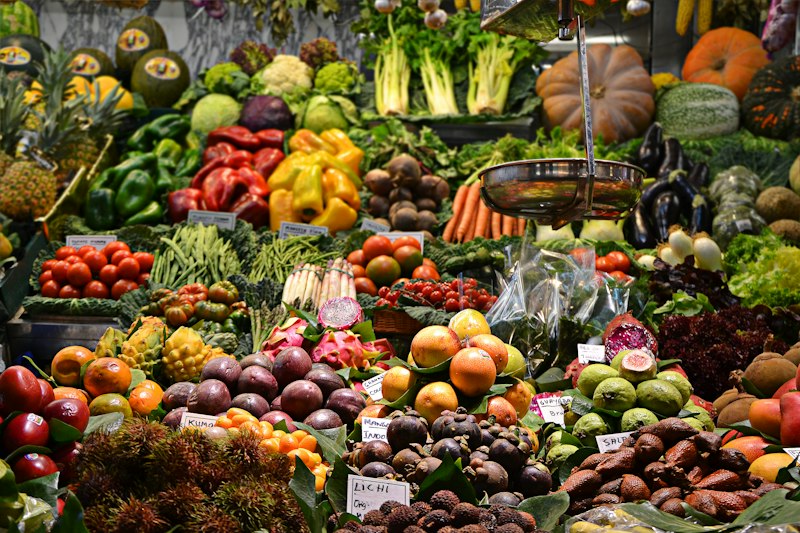
- August: Peak everything. Tomatoes and sweet corn at full flood, peaches at their best, melons, peppers, eggplant, and the year's widest tables. If you only shop one market month, make it this one.
- September: Late tomatoes and corn overlap with the fall arrivals — apples in force, winter squash, broccoli, cauliflower, grapes, and the last peaches early in the month.
- October: Apples and pumpkins own the market, with root vegetables, brussels sprouts, greens sweetened by the first frosts, and cider everywhere.
- November–December: Storage crops — potatoes, onions, winter squash, apples, cabbage — plus greenhouse greens, mushrooms, meat, eggs, cheese, bread, and holiday baking. This is when the year-round vendors prove their worth.
- January–April: Winter-market territory: root cellars, hydroponic and greenhouse greens, mushrooms, dairy, pastured meats and eggs, honey, and preserved goods.
Where Can You Shop at a Farmers Market in Winter?
The Valley doesn't shut down in January; it consolidates. Four options carry the cold months:
The Allentown Fairgrounds Farmers Market is the anchor — indoor, heated, and running its full Thursday-to-Saturday schedule every week of the year. The Easton Farmers' Market winter market keeps the open-air tradition alive on Saturdays from January through April, in its shorter late-morning window on Northampton Street outside the Public Market. The Emmaus winter market runs twice-monthly Sunday sessions through the same stretch. And the Easton Public Market is open five days a week regardless of season, with its butcher, baker, and fishmonger covering most of what a winter market would.
Farm stores fill the remaining gaps. Klein Farms Dairy & Creamery, a working third-generation dairy farm in Forks Township, runs a farm store with raw milk, cheeses, eggs, and ice cream made from the farm's own herd — the kind of place that makes a February drive worth it.
Do Lehigh Valley Farmers Markets Take SNAP, EBT, and FMNP Checks?
Yes, at most of the major markets — and in Easton's case, your benefits stretch further than they would at a grocery store.
The Easton Farmers' Market runs a token system for SNAP: swipe your EBT card at the market's info tent for red tokens to spend with vendors, and the market matches your purchase with Fresh Food Bucks — up to 10 dollars per market day — good for fresh fruits and vegetables. That's the Food Bucks incentive model, administered regionally by The Food Trust, and it effectively doubles the first ten SNAP dollars you spend each Saturday.
The Pennsylvania Farmers Market Nutrition Program (FMNP) is separate: paper checks issued to WIC participants and to seniors 60 and over who meet income guidelines, spendable with participating farmers from June 1 through November 30. Lehigh and Northampton counties run an active FMNP program — fmnplehighvalley.com lists participating vendors and pickup details — and recent seasons have included bonus incentives at the Easton and Bethlehem markets. Individual farm stands at the Allentown Fairgrounds and the smaller markets participate vendor by vendor, so look for the FMNP sign at the stall or ask the market manager's table. If you rely on any of these programs, check the market's current-season policy before you go; the programs are stable but the per-market details shift year to year.
How Do You Shop a Farmers Market Well?
A few habits separate the people who leave with the good peaches from the people who leave with regrets:
- Go early for selection, late for deals. The best of anything scarce — strawberries in June, heirloom tomatoes in August — is gone within the first hour or two. The final half hour is when some vendors would rather discount than repack.
- Bring cash and bags. Most vendors now take cards, but small bills keep lines moving and a few holdouts are still cash-only. Bring more totes than you think you need, and a cooler in the car for meat, dairy, and eggs.
- Walk the whole market first. Prices and quality vary stall to stall for the same crop. One full lap before you buy anything is the single highest-return habit in market shopping.
- Ask what to do with it. Farmers are the best free cooking resource in the Valley. Ask what they'd make with the kohlrabi and they'll tell you, usually with strong opinions.
- Buy what's peaking, plan around it. The market rewards flexibility. Shop first, choose recipes second.
Local rule of thumb: If it's July or August and you're at a Saturday market by 9am, buy the corn first and everything else second. Sweet corn picked that morning and eaten that night is a different vegetable from anything sold under fluorescent light, and the early crates are the ones picked at dawn.
What Should You Do With the Rest of the Day in Each Market Town?
Every market in this guide sits within a short walk or drive of a town worth lingering in. Since you're already parked, make the morning a day.
Easton
From Scott Park it's a five-minute walk up to Northampton Street, where the day builds itself: made-to-order donuts at Glazed (4.8 stars, 102 reviews in our directory data, at 149 Northampton St), Aussie savory pies at Pie + Tart (4.9 stars, 148 reviews, a block up at 349 Northampton St), and a proper coffee at Threebirds Coffee House. Our downtown Easton guide maps the full loop, our downtown Easton restaurant guide handles lunch, and if the riverfront put you in a walking mood, the city's green spaces are covered in our Easton parks guide. Ten minutes north in Forks Township, Klein Farms adds a farm-store stop with ice cream from its own dairy.
Allentown
Lunch is already solved — The Market Grille inside the Fairgrounds market — so the question is before and after. Cravings by Dorcaris in the West End holds a perfect 5 stars across 298 reviews in our directory data and is minutes from Chew Street; La Vida Cafe downtown covers the coffee. For everything else, start with our Allentown restaurant rankings.
Bethlehem
The Farrington Square market puts you on the South Side, steps from the arts district; the Rose Garden market puts you on the west side, a short hop from Main Street's shops. Either way our Bethlehem restaurant rankings have the follow-up meal, and a summer Saturday practically demands a cone from our Lehigh Valley ice cream guide.
Emmaus, Hellertown, and the western Valley
The Sunday markets pair naturally with a slow afternoon: the borough coffee shops and bakeries in our Lehigh Valley bakeries guide, a tasting flight from our wineries directory, or a patio pint from our breweries directory — several of the Valley's best sit within 15 minutes of both markets.
Which Farm Stands and Pick-Your-Own Farms Are Worth the Drive?
The markets are the weekly ritual; the farms are the field trip. All of these sit within roughly 30 minutes of the central Valley, and all sell direct in season:
- Grim's Orchard & Family Farms (Breinigsville): The western Valley's big pick-your-own operation — strawberries roughly late May through June, cherries into July, 20-plus apple varieties from late summer into November, plus a fall pumpkin patch and corn maze.
- Bechdolt Orchards (Hellertown): A longtime orchard and farm stand on Leithsville Road — a natural add-on to the Sunday Saucon Valley market.
- Scholl Orchards (Bethlehem/Kernsville): Multi-generation orchard known for peaches and apples, with seasonal stands.
- Strawberry Acres (near Coplay): Seasonal picking across strawberries, cherries, peaches, apples, and pumpkins, with a farm market for pre-picked fruit.
- Bob White Acres (Coopersburg): A quieter pick-your-own with strawberries, blueberries, peaches, nectarines, and apples through the season.
- Klein Farms Dairy & Creamery (Forks Township): Not pick-your-own but a true working dairy with a farm store — raw milk, farm-made cheeses, eggs, and ice cream. Full details in our directory listing.
Picking windows move with the weather by a week or two in either direction every year, so call or check the farm's page before loading the car — especially for strawberries and cherries, whose seasons are short and unforgiving.
Bottom Line: One Valley, a Market for Every Day
The farmers markets of the Lehigh Valley are less a list than a weekly circuit. The Easton farmers market is the flagship — 274 seasons old, Saturday mornings on the riverfront, the one to show off to visitors. The Allentown farmers market at the Fairgrounds is the workhorse — indoor, year-round, Thursday through Saturday, with lunch built in. Bethlehem covers Thursdays and Saturdays, Emmaus and Hellertown own Sundays, Macungie takes Thursday evenings, and the Easton Public Market fills the weekdays in between. Learn the calendar, shop what's peaking, bring cash and a cooler — and confirm the hours before you go, because the one constant across 274 years of market history is that the details keep changing.
Find the best local businesses in Lehigh Valley. Plan the rest of your market day with our restaurants directory, grab dessert from our Lehigh Valley bakeries guide, or refuel at one of our top-rated coffee shops — real businesses vetted by locals.